Before you buy a truck
Landstar Lease Purchase Program: The Truth From a BCO Who's Been Driving 30 Years
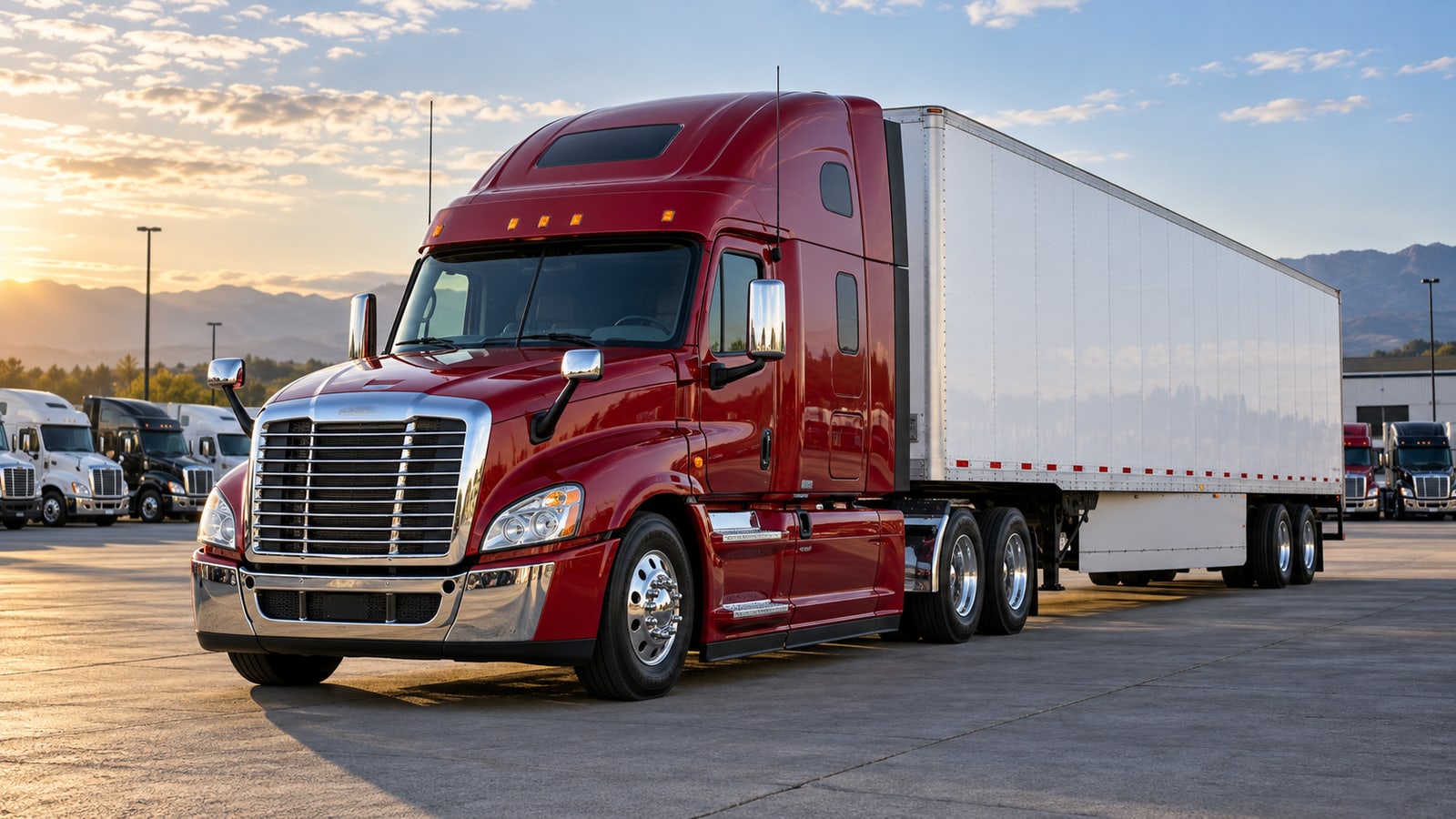
If you're looking for a Landstar lease purchase program, here's the straight answer: there isn't one. You won't be buying a truck from Landstar.
When drivers talk about "leasing to Landstar," they mean leasing onto Landstar. You bring your own truck, owned or financed yourself, and contract it to Landstar as a Business Capacity Owner, or BCO.
A lease purchase works differently. You lease a truck from a carrier or equipment provider and make payments toward owning it someday, subject to the agreement.
At Landstar, you show up with the truck. The company provides the authority, the agent network and access to freight. The truck and the business decisions are yours.
I've been driving 30 years and I'm a Landstar BCO today. If you searched "Landstar lease purchase" because you don't have a truck, a down payment, savings or good credit yet, this is for you. You can work toward getting there. Just probably not the way the ads make it sound.
Before anything else: read through the Landstar owner-operator requirements so you know what qualifying actually involves. It'll save you from buying the wrong truck or chasing the wrong plan.
Why Lease Purchase Sells So Well
Lease purchase sells instant gratification and hope. No money down, no credit check, drive away this week, own your truck in a few years. If you're stuck as a company driver watching other people run their own business, that pitch hits hard.
Here's my problem with it. In most programs I've seen, the deal isn't built to benefit the driver. The carrier holds the cards. They control the truck, the freight, often the dispatch, and the terms of what happens if you leave. The driver carries the downside: the repairs, the slow weeks, the payments that keep coming whether the wheels turn or not.
I don't trust these programs as a group. That doesn't mean every contract is illegal or that every one is a scam. Some legitimate programs exist, and some drivers do finish them and come out owning a truck. There's no reliable nationwide failure rate I can point you to, so I won't quote one.
What I can tell you is what the federal review found. The FMCSA's Truck Leasing Task Force studied lease-purchase arrangements, and Consumer Financial Protection Bureau staff prepared a January 2025 report to the Department of Transportation based on contracts and driver accounts they reviewed. The report described earnings and expense projections that were confusing, and financing terms that lacked disclosures a driver could actually understand. That's not a nationwide survey of every program. But it's enough to tell you to read every page before you sign anything.
The Hard Truth: The Truck Won't Fix Your Money Habits
Landstar won't make bad business habits disappear. It exposes them. So does owning any truck.
If you can't save money as a company driver with a steady paycheck, getting a truck won't fix that. Now there are bigger bills, irregular income and nobody else paying for the blown turbo.
My personal readiness test is this: can you save $20,000 to $50,000 while you're still a company driver? That's not an official Landstar minimum. It's not enough for every truck either. It's my test, because the discipline it takes to stack that money is the same discipline it takes to survive as an owner-operator.
I want to be fair here. If illness, a family emergency or some other hardship wiped out your savings, that isn't proof of bad character. Life hits people. But it still means you're not financially ready right now, and the right move is to wait and rebuild, not to sign a contract and hope.
A Word About Company Jobs
Here's something I don't hear many owner-operators say out loud. Looking back after 30 years, I wish I had taken a union job. I'd be close to retirement now.
I'm not telling you that to talk you out of owning a truck. I'm telling you because a good company job, especially one with a 401(k), a pension where it's available and real benefits, is a respectable career. It isn't failure. Owning a truck is one way to build a trucking life. It's not the only way, and it's not automatically the best one.
When you compare a company job to owning, don't just compare a paycheck to a settlement. Compare the whole package:
| Cost or benefit | Company job, where offered | Owner-operator |
|---|---|---|
| Health insurance | Employer contribution toward premiums | Budget for your own coverage |
| Retirement | Employer match or pension contributions | Fund your own retirement plan |
| Paid time off | Paid vacation and holidays | Fund time off from business earnings |
| Administration | Company handles business paperwork | Your time on books and business paperwork |
| Downtime | Truck repair isn't your bill | Repair costs and continuing bills without truck revenue |
A company job that looks smaller on paper can be worth more than you think once you count all of that.
If you still want to own, good. Let's do it right.
Three Realistic Paths to Your Own Truck
Path 1 (My Preference): Save Cash and Buy a Sound Used Truck
This is the path I'd pick. You save while driving for a company, then buy a solid used truck with cash, outright. No loan, no lender, no payment.
But cash for the truck is only part of it. You also need:
- A major repair reserve. No truck payment does not mean no repair bills. Older trucks break, and big repairs don't wait for a good week.
- Several months of home and business expenses set aside, so a slow start or a breakdown doesn't put your mortgage at risk.
Before you hand over a dollar:
- Get an independent pre-purchase inspection from a shop that doesn't work for the seller.
- Pull maintenance records and look for patterns, not just the last oil change.
- Ask about emissions system repairs, history and current condition.
- Verify the truck meets Landstar's equipment eligibility before you buy it. Don't assume. Check the requirements and confirm.
Path 2: Down Payment on a New or Lightly Used Truck With Warranty
If you can put a solid down payment on a new or lightly used truck with a manufacturer warranty, and finance it through an independent lender, that's a legitimate route too.
Financing a truck on your own is compatible with being a Landstar BCO. Landstar's business model is built around operators who independently own or finance their trucks and haul through its agent network, as this comparison of trucking business models lays out. Your truck doesn't have to be paid off before you lease on, provided your financing permits the arrangement and you meet Landstar's requirements.
Still, don't let a warranty make you careless:
- Warranties have exclusions. Read them. Know what's covered and what isn't. Confirm remaining coverage, transferability and any deductible on a used truck.
- Downtime still happens. A covered repair can still leave you parked for days or weeks.
- Payments continue while the truck sits. The bank doesn't care that you're waiting on a part.
You still need reserves on this path.
Path 3: A Carefully Vetted, Legitimate Lease Purchase
I'm skeptical, but I won't pretend there's no such thing as a fair lease purchase. If you go this way, it has to be carefully vetted, and it has to end with clear title in your name when you complete every purchase obligation.
Understand what you're signing up for:
- A carrier-tied agreement may keep you there for years. If you can't tolerate how they run things, the deal is going to hurt.
- You still have to save, pay your taxes and maintain the truck the whole time. The lease doesn't do that for you.
- You'll need repair reserves at payoff. A truck that's paid off right as it starts needing major work is not a prize unless you planned for it.
- Know whether your truck can leave, and when. It depends on the paperwork. If the agreement ties the truck to that carrier, you can't bring it to Landstar until the contract allows it, whether through completion, payoff or a permitted buyout, and Landstar approves the truck. Independent financing may allow a carrier change while a balance remains. Get any required lender or lessor permission and carrier release in writing. No recruiter's promise overrides what the contract says.
A Note on Driving for a Fleet Owner
Some people drive for a fleet owner leased to Landstar before buying their own truck. That can be a good bridge to save money and learn how the business side works. But it doesn't give you ownership. It's a learning and savings step, not a path to title by itself. Any separate purchase arrangement is with that owner, not a Landstar company lease-purchase program.
Want to understand how the BCO side works before you pick a path? Read Landstar 101: The Business Model and take a look at how the Landstar load board actually functions. At Landstar, your job is to run the business, and it helps to know what that business looks like.
How Long Will It Take to Save?
Here's a simple timeline. It assumes you start at zero, earn no interest and never miss a week of saving. Weeks are rounded up to the next whole week.
| Weekly savings | To $20,000 | To $35,000 | To $50,000 |
|---|---|---|---|
| $250/week | 80 weeks | 140 weeks | 200 weeks |
| $500/week | 40 weeks | 70 weeks | 100 weeks |
| $750/week | 27 weeks | 47 weeks | 67 weeks |
Look at that table honestly. If $250 a week sounds impossible right now, that's information. If $750 a week sounds doable, you might be closer than you think.
Break Your Money Into Buckets
"I've got $30,000" means nothing until you know what it's for. Separate it:
- Acquisition: the truck itself, or the down payment.
- Startup and working capital: plates, permits, insurance deposits, fuel and the costs of running before your first settlements catch up.
- Repair reserve: money that only gets touched when the truck breaks.
- Home runway: several months of household bills.
- Taxes: set aside as you earn, not when the bill shows up.
- Replacement: the next truck. This one won't last forever.
If all of that is one pile in one account, you'll spend the repair money on fuel and the tax money on tires.
A Hypothetical Downtime Stress Test
This is a made-up example to show how fast things add up. Your numbers will be different.
Say your truck needs a $12,000 repair and sits for three weeks.
- Repair bill: $12,000
- Fixed costs that keep running (truck payment, insurance, etc.), hypothetically $900 a week for 3 weeks: $2,700
- Household bills, hypothetically $1,350 a week for 3 weeks: $4,050
Total: $18,750, with no money coming in.
Notice what that $18,750 is. It's not truck money. It's what one bad stretch could cost on top of whatever you paid for the truck. That's why reserves are a separate bucket from purchase money. Run this test with your own numbers before you buy.
A $4,500 Settlement Is Not a $4,500 Paycheck
This trips up a lot of new owner-operators.
First, reconcile the settlement. Account for advances you already took, fuel and deductions. Make sure you're not counting costs twice, like subtracting fuel that's already been taken out. Pay operating bills that haven't already been withheld before deciding what's available.
Now, assume for this example that $4,500 is what's left after your current business operating bills are paid, but before reserves, taxes or anything you pay yourself.
My personal starting point is to reserve at least one-third of that for taxes, repairs and replacement. That's not a tax rate. It's not guaranteed to be enough. It's a habit.
Here's how that $4,500 could break down:
- $1,500 to reserves for taxes, repairs and replacement
- $1,350 household draw, living the same way you did as a company driver
- $1,650 to further business savings
That means $3,150 stays in the business. But don't mistake it for free profit or wealth. A big part of it already belongs to future tax bills and future repairs. Keep the tax portion separately accounted for so it doesn't get spent on the truck.
A few things to understand about taxes:
- Business cash outflows and tax deductions aren't the same thing. The principal portion of a truck payment, for example, generally isn't deducted the way an expense is. Depreciation works differently.
- If you're a sole proprietor, your owner draw isn't a deductible business expense. Pulling money out for yourself doesn't lower your taxable profit. Other business structures handle owner pay differently, so ask your tax pro how yours works.
- Self-employment tax is figured on net earnings, in addition to income tax, and the IRS generally expects self-employed people to make estimated payments quarterly.
Work out your actual tax provision with a tax professional. Saving like this builds resilience and gives you more room when something goes wrong. It doesn't guarantee you'll stay in business. It gives you a better chance of keeping a bad week from becoming a bad year.
Questions to Ask Before You Sign Any Lease Purchase Contract
If you're considering Path 3, get clear answers in writing:
- What's the total price, including the down payment, every scheduled payment, fees and any balloon or buyout payment at the end?
- Who holds title and what liens exist during and after the lease? What exactly triggers transfer to you?
- What happens if I leave early or default? What do I lose, and what could I still owe?
- How does escrow work, and when and how is it refunded?
- Who pays for maintenance, and who decides where repairs are done?
- Who controls freight and dispatch? Can I refuse a load or change carriers without violating the agreement?
- Do payments continue while the truck is down?
Then do two more things. Have the contract reviewed by an independent attorney familiar with trucking agreements. And interview drivers who completed the program and drivers who left it. You learn a lot from both groups.
I Returned the Truck. The Consequences Didn't End There.
That question about leaving early isn't theoretical for me. In 2002, when I was 26, I entered a lease purchase with C.R. England. A couple of months later, I returned the truck to them in Salt Lake City because I couldn't make money with the arrangement.
I didn't abandon it. I brought it back in good condition, the same condition I'd received it in. I thought I was doing everything right. I'd tried, it hadn't worked out, and I figured we were parting ways amicably.
Boy, was I wrong.
They reported an $85,000 repossession on my personal credit report, and it stayed there for the next seven years. I was 26 with a family, trying to build a life. A couple of months in that truck left me dealing with damaged credit for years after I'd handed back the keys.
That's my experience with that agreement in 2002, not a description of every lease purchase or the company's current terms. But it's why I want you to understand the exit before you ever get in. Returning a truck in good condition and being released from the financial obligation are not the same thing. Ask what happens to the balance, your personal liability and your credit if you leave. Don't assume a polite goodbye means the deal is over.
Your Next 90 Days
You don't need a truck to start. You need a plan you can check against.
Days 1-30: Find Out Where Your Money Actually Goes
- Pull your last three months of bank and card statements and total every category. No guessing.
- List every fixed household bill with its amount and due date.
- Use a separate savings account for the truck fund.
- Set an automatic transfer on payday for an amount you can sustain every week, even if it's small.
- Pick your target and date from the savings table above.
- Review your credit reports and mark anything that looks wrong.
Days 31-60: Tighten It Up
- Compare what you actually spent in month one to your budget. Cut or redirect a category into savings where you can.
- If you hit your transfer every week and the budget supports it, raise it. If you missed, adjust it to something you'll actually keep.
- Dispute documented credit report errors. Real disputes take time. Don't count on a promised instant credit fix.
- Put bills on a calendar reminder or suitable autopay arrangement so you stay current without overdrawing your account.
- Keep a separate household emergency fund apart from the truck fund.
Days 61-90: Test the Plan Against Real Numbers
- Check your savings against the table. Recalculate your target date based on what you actually saved, not what you hoped to.
- Get real quotes: trucks that meet Landstar's equipment requirements, plus insurance estimates. If you ask about financing, find out first whether the quote triggers a hard credit inquiry.
- Run the downtime stress test with those quotes.
- Sit down with a tax professional to learn how estimated payments would work for you.
- Check your record and experience against the requirements.
- Then decide honestly: on pace, adjust the plan or wait.
Landstar Lease Purchase Questions
Does Landstar Have a Lease Purchase Program?
No. Landstar's own truck resource for prospective owner-operators, dated February 2025, says it doesn't offer one. Its current business-model explanation describes independently owned or financed equipment. If you searched "land star lease purchase program" or "land star lease purchase," you're asking about the same company. The real path is bringing your own truck and leasing onto Landstar as a BCO.
Can I Lease Onto Landstar With a Financed Truck?
Yes. Landstar's model works with operators who independently own or finance their trucks. Your financing must allow the arrangement, and you and the truck still have to meet Landstar's requirements.
Can I Move My Lease Purchase Truck From Another Carrier to Landstar?
It depends on the agreement. A truck tied to another carrier's program can't move until the contract permits the change, any required releases are obtained, and Landstar approves it. A truck financed through an independent lender can often lease on with a lien still on it, if the lender allows it and Landstar's requirements are met. Read your contract, ask your lender or lessor, and confirm with Landstar before you count on anything.
How Much Should I Save Before Buying a Truck?
My personal test is $20,000 to $50,000 saved while driving for a company. That's not a Landstar minimum and it may not cover your actual startup budget. Price the truck or down payment, working capital, repairs and household reserves separately. Don't spend every dollar getting the keys.
And don't mistake that range for a ceiling. I personally know an owner-operator who saved enough to buy his first new truck outright. He still pays cash when it's time to replace his equipment.
He's about as down-to-earth as they come. He'll tell you he's not good with money. So he built a system that doesn't depend on being good with money every time a settlement arrives: he pays himself a fixed amount to live on and keeps the rest set aside for the business and the future.
That's the part worth copying. Not somebody else's truck or somebody else's lifestyle. A system. Decide what you need to live on, account for the business bills and taxes, and stop treating everything left over as spending money. You don't have to start with enough cash to buy a new truck. You have to start building the habits that could get you there. Where there's a will, there's a way, but the way usually looks like years of steady discipline.
Is Staying a Company Driver a Failure?
No. A company job with good benefits, a 401(k) or a pension where available is a respectable career. After 30 years, I'd tell you to weigh it seriously.
Ready to apply? If you already have your truck lined up, your reserves in place and you've confirmed you meet the requirements, read the Landstar application guide, then start your Landstar application here.
Disclosure: I may earn a referral bonus if you join Landstar through this link.
If you're not ready yet, that's fine. Start saving this week, get your numbers straight and keep your eyes open. When you show up with your own truck and money in the bank, you'll have more control over the decisions that come next.